 Skip to content

Have you ever strolled through a bustling night market in China and caught sight of those irresistible skewers of fruit glistening under colorful lights? That’s tanghulu, and I’m here to bring that magic straight to your kitchen with this easy Tanghulu Recipe. It’s simpler than you might think to whip up at home—no fancy equipment required, just a few basic ingredients and a bit of patience for that signature crackly sugar shell. In my experience, making tanghulu has become a fun family tradition, especially during holidays when we crave something sweet and unique.
What I love most about this Tanghulu Recipe is how it transforms everyday fruits into a dazzling treat that looks straight out of a street food stall. Whether you’re a fan of the classic grape version or want to experiment with strawberries, this recipe delivers that perfect balance of juicy fruit and hardened candy coating every time. Let’s be honest, who wouldn’t want to impress friends with homemade tanghulu at your next gathering? I’m excited to share every detail so you can create your own batch and relive those market vibes right at home.
Key Takeaways:
- This Tanghulu Recipe is a quick way to make authentic Chinese street food at home, perfect for beginners.
- Prep and cook time totals under 30 minutes, saving you hours compared to store-bought versions.
- The result is a burst of fruity sweetness wrapped in a crispy sugar shell that melts in your mouth.
- For the best results, use fresh fruits and monitor the syrup temperature closely.
- Store your Tanghulu Recipe in a cool place to keep the coating intact for up to a day.
Why You’ll Adore This Tanghulu Recipe
Irresistibly Simple and Authentic: Dive into the world of Chinese street eats without leaving your kitchen—this Tanghulu Recipe captures that vendor-fresh taste effortlessly. I’ve made it countless times, and it always wows with minimal fuss. You’ll feel like a pro after your first try, and the compliments will keep coming.
Quick Prep for Instant Gratification: In under half an hour, you have a stunning snack ready to devour; no waiting around for complicated setups. It’s ideal for spontaneous cravings or last-minute parties, and the hands-on fun makes it engaging for kids too. Trust me, the payoff is huge for such little effort.
Customizable Fruit Explosion: Choose your favorite fruits to personalize this Tanghulu Recipe, from tart grapes to sweet berries, ensuring it suits every palate. The juicy contrast against the crunchy shell is pure bliss—what’s not to love? It’s versatile enough for any season or dietary tweak.
A Healthier Sweet Treat Option: Compared to heavy desserts, this Tanghulu Recipe highlights real fruit under a thin candy layer, making it a guilt-free indulgence. We always pair it with tea for a balanced snack, and it never feels overly sugary. You’ll find yourself reaching for it more often than expected.
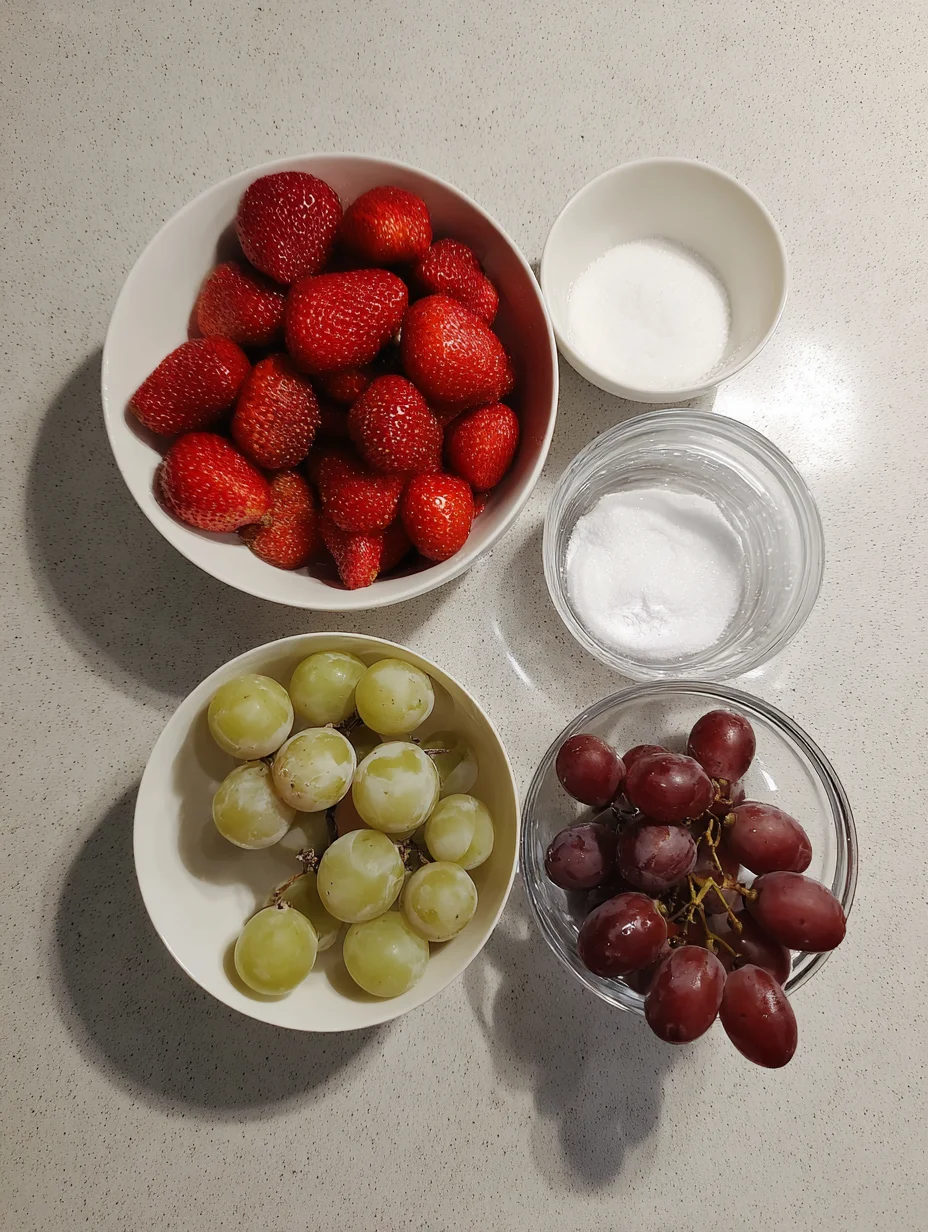
Essential Ingredients for Tanghulu Recipe
Fresh Grapes or Strawberries: These are the stars of the show, providing that juicy, fresh burst inside the hard shell. I recommend seedless grapes for easy eating or plump strawberries for a vibrant twist—whatever you choose, wash them thoroughly for the cleanest tanghulu. In this Tanghulu Recipe, their natural sweetness shines through, balancing the candy coating perfectly without overpowering it.
Granulated Sugar: The base for your glossy syrup, this simple pantry staple hardens into that iconic crackle we all crave. Use pure white sugar for the clearest coating; it caramelizes beautifully when heated just right. Without it, you couldn’t achieve the authentic texture that defines tanghulu—it’s non-negotiable for success.
Water: Acting as the solvent to dissolve the sugar, water helps create a smooth syrup that coats evenly. A small amount is all you need to get the mixture bubbling to the perfect stage. In my trials with this Tanghulu Recipe, the right water-to-sugar ratio ensures no grainy bits, leading to a flawless finish every time.
How to Make Tanghulu Recipe
Prepare Your Fruits
Start by rinsing your chosen fruits under cool water and patting them dry with a clean towel—this step is crucial in this Tanghulu Recipe to ensure the syrup adheres without slipping off. If using grapes, cluster about 8-10 on wooden skewers for that classic look, or thread strawberries individually for bite-sized pieces. In my experience, drier fruits make for a stronger bond with the coating, so don’t skip the patting. Arrange them on a lined baking sheet ready for dipping, and have a bowl of ice water nearby to prevent sticking later.
Cook the Sugar Syrup
Combine sugar and water in a small saucepan over medium heat, stirring until the sugar dissolves completely into a clear liquid. Once it starts bubbling, stop stirring and let it boil until it reaches the hard-crack stage around 300°F—use a candy thermometer if you have one for precision. The syrup will turn a light amber color, filling your kitchen with that irresistible sweet aroma. This is the heart of the Tanghulu Recipe, so watch closely to avoid burning; it happens fast, and the right temperature guarantees the signature snap.
Dip and Set the Tanghulu
Quickly dip each fruit skewer into the hot syrup, swirling gently to coat evenly, then plunge into the ice water bath for a few seconds to harden the shell—this Tanghulu Recipe step is where the magic happens. Lay them on the prepared sheet to set fully, which takes just minutes at room temperature. The contrast of warm syrup hitting cold water creates that perfect crunch, and soon you’ll hear the satisfying crack with every bite. For extra flair, serve immediately to capture the freshness before the coating softens.
Ingredients
- 2 cups fresh grapes or strawberries, washed and dried
- 1 cup granulated sugar
- 1/2 cup water
- Wooden skewers (about 10-12)
- Ice water for setting
Tanghulu Recipe Instructions
- Rinse and dry your fruits thoroughly. Skewer them neatly, leaving space between pieces for even coating.
- In a saucepan, mix sugar and water. Heat over medium, stirring until dissolved, then boil undisturbed to 300°F.
- Dip skewers in hot syrup, then immediately into ice water to set the hard shell.
- Place on a parchment-lined tray to cool completely before enjoying your homemade tanghulu.
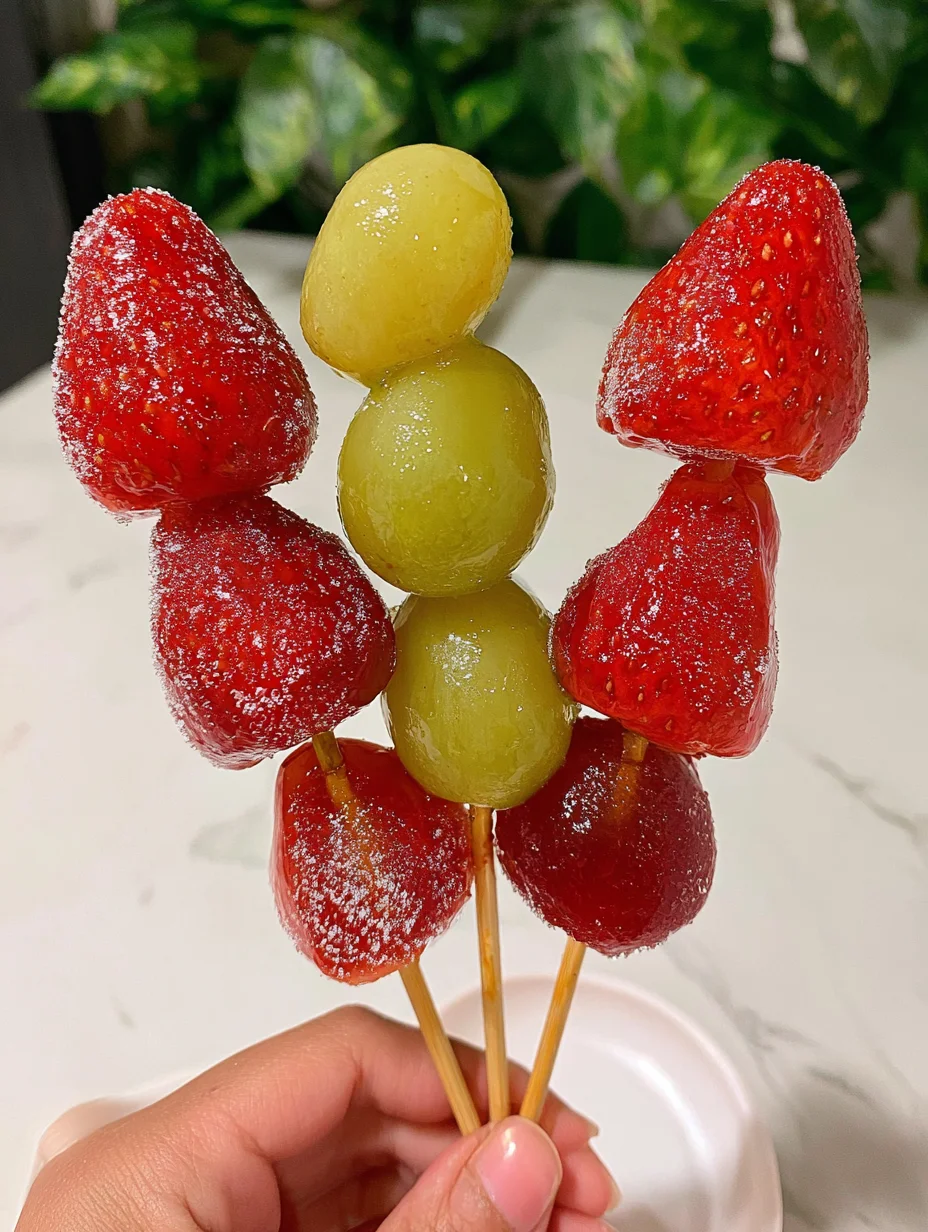
Pro Tips for the Best Tanghulu Recipe
Fruit Selection: Opt for firm, ripe fruits to avoid sogginess inside the shell—overripe ones can weep juice and soften the coating prematurely.
Syrup Temperature: Invest in a candy thermometer; hitting exactly 300°F ensures the hard-crack stage without sticky disasters.
Quick Dipping: Work fast once the syrup is ready, as it hardens quickly—have all skewers prepped to keep the process smooth.
You Must Know
- Tanghulu originated as a Beijing street food in the Qing Dynasty, symbolizing sweet prosperity.
- The sugar syrup must reach the hard-crack stage for the authentic crunchy texture—lower temps lead to chewy results.
- Fresh fruits are key; frozen ones release too much moisture, ruining the crisp shell.
- This treat is best eaten the day it’s made, as humidity can soften the coating overnight.
How to Store Tanghulu Recipe
To keep your Tanghulu Recipe fresh, store the skewers in an airtight container in a cool, dry place away from direct sunlight—room temperature works best to maintain the crunch for up to 24 hours. Avoid the fridge, as the moisture can make the shell sticky and soft quickly. If needed, re-crisp by briefly waving over a heat source like a candle flame, but it’s best enjoyed fresh for that peak snap.
Customizing Your Tanghulu Recipe
Feel free to swap grapes for strawberries, oranges, or even cherry tomatoes for a savory twist in this Tanghulu Recipe—experiment to match your tastes. If you’re watching sugar, a corn syrup mix can help stabilize the coating without altering flavor much. For added flair, sprinkle sesame seeds post-dip before setting. Check out our sweet and sour chicken recipe for more Asian-inspired ideas to pair alongside.
What to Serve with Tanghulu Recipe
Pair this Tanghulu Recipe with a hot cup of green tea to cut through the sweetness and enhance the fruity notes perfectly. For a fuller snack spread, add some roasted nuts or a light fruit salad on the side to balance textures. During parties, it shines next to simple appetizers like veggie skewers or cheese bites—keep beverages refreshing like iced jasmine tea to complement the treat without overwhelming it.

Tanghulu Recipe (Chinese Candied Fruit)
This tanghulu recipe for a popular Chinese candied fruit snack only requires 3 ingredients and has the most satisfying crunch!
Timing
Recipe Details
Ingredients
- 01 1 lb strawberries, grapes, or other fruit of choice ((~30 pieces))
- 02 2 cups white sugar
- 03 1 cup water
Instructions
Wash fruit and pat dry. Remove leaves, stems, or any inedible parts. Place fruit onto skewers. I recommend 3 pieces or less per skewer so it is easier to work with.
In a small pot on low to medium heat, add sugar and water. Do not stir. Bring to a boil and simmer until it is thick like syrup and amber in color (~300°F). This takes about 10-20 minutes.
Test the temperature of the syrup by drizzling a spoonful into an ice water bath. If it hardens within seconds and cracks when bent, then it is ready.
Quickly dip the fruit skewers in syrup then swirl to evenly coat a thin layer. Immediately dip the skewer into an ice water bath to cool and harden the sugar coating.
Place skewer on a plate, repeat with the remaining (work fast so the sugar doesn't burn), and enjoy!
FILED UNDER:
NUTRITION FACTS (PER SERVING)
Nutrition information is calculated using an ingredient database and should be considered an estimate. In cases where multiple ingredient alternatives are given, the first listed is calculated for nutrition. Garnishes and optional ingredients are not included.
Frequently Asked Questions About Tanghulu Recipe
Can I make Tanghulu Recipe ahead of time?
Yes, you can prepare the fruits and syrup base earlier, but assemble and coat just before serving to preserve the crunch. Storing fully made tanghulu for more than a few hours risks softening, so timing is key for the best experience.
How long does Tanghulu Recipe last in the fridge?
While not ideal, it can last up to 12 hours in the fridge if wrapped loosely to minimize moisture exposure. Let it come to room temp before eating to regain some crispiness, though it’s never quite as good as fresh.
Is a candy thermometer necessary for this Tanghulu Recipe?
It’s highly recommended for accuracy, but if you don’t have one, test by dropping a bit of syrup in cold water—if it forms hard threads, you’re good. Practice makes perfect without it, but the thermometer eliminates guesswork.
What fruits work best in Tanghulu Recipe?
Grapes and strawberries are classics due to their size and juiciness, but try blueberries or pineapple chunks for variety in this Tanghulu Recipe. Firmer fruits hold up better to the hot syrup without bursting.
Can kids help make this Tanghulu Recipe?
Absolutely, but supervise the hot syrup step closely—let them skewer fruits and dip in ice water for safe, fun involvement. It turns into a great learning activity about candy-making basics.
How do I avoid sticky Tanghulu Recipe coating?
Ensure the syrup hits the hard-crack stage and dip quickly, then set in ice water immediately. This Tanghulu Recipe trick prevents tackiness—store in low humidity too for lasting crispness.
What’s the calorie count for one serving of Tanghulu Recipe?
A standard skewer with grapes clocks in around 150-200 calories, mostly from the sugar shell, making it a moderate treat. Opt for smaller fruits to lighten it up without sacrificing fun.
Can I add flavors to my Tanghulu Recipe?
Infuse the syrup with a splash of lemon juice or vanilla extract for a twist, but keep additions minimal to avoid altering the set. Experiment sparingly for delightful variations on the classic.
Final Thoughts
There you have it—the full scoop on crafting this delightful Tanghulu Recipe that brings a piece of Chinese street food culture to your table. From the juicy fruits to that satisfying crack, every bite is worth the quick effort, and I know you’ll love sharing it as much as I do. Give this Tanghulu Recipe a whirl today, and don’t forget to tag us with your creations—happy cooking!