 Skip to content
I’ll be completely honest—when I first saw the gelatin trick for weight loss flooding my TikTok feed, I rolled my eyes so hard I nearly sprained something. Another wellness “hack” promising effortless results? Please.
But here’s the thing about dismissing trends too quickly: sometimes they’re grounded in something real. And after two months of actually testing this gelatin trick recipe, along with diving into the nutritional science behind it, I’ve got some surprising findings to share with you.
This isn’t another magical solution that melts fat while you sleep. But it is a genuinely useful tool that works through actual physiological mechanisms—and it costs about thirty cents per serving. Let me walk you through what this viral trend is really about, why it might actually help, and how to do it properly.
Key Takeaways: What You Need to Know About the Gelatin Trick
- The gelatin trick for weight loss works primarily through appetite suppression and protein satiety—not fat burning
- The 3 ingredients in the basic recipe are unflavored gelatin, water, and an acid (lemon juice or apple cider vinegar)
- Gelatin trick recipe weight loss TikTok trends show real user experiences, but individual results vary significantly
- Consuming gelatin 15-30 minutes before meals appears most effective for portion control
- This approach works best when combined with overall healthy eating patterns, not as a standalone solution
- Vegetarian alternatives exist, though they may not provide identical benefits
Table of Contents
What Is the Gelatin Trick for Weight Loss? (Separating Hype From Reality)
Let’s cut straight to it. The gelatin trick recipe for weight loss is deceptively simple: you mix unflavored gelatin powder with water and an acidic ingredient like lemon juice or apple cider vinegar, let it set briefly, then consume it before meals or as a low-calorie snack.
That’s it. No exotic superfoods, no expensive supplements, no complicated preparation.
The viral aspect came from TikTok users sharing their experiences with this approach, often positioned as a secret that “doctors don’t want you to know” or “the Hollywood trick celebrities use.” (Eye roll number two—doctors actually understand this science quite well, and I’m about to explain it to you.)
What makes this gelatin trick recipe weight loss TikTok trend different from typical wellness fads is that there’s legitimate nutritional science supporting the mechanisms at play. Gelatin is essentially pure protein derived from collagen, and protein is the most satiating macronutrient we can consume.
Grab This Kitchen Scale Now — Best Precision Pick!
- Razor-Accurate Every Time: Dual-increment precision down to 0.1g — perfect for baking, meal prep, and portion control with g, oz, ml, and fl'oz modes.
- Smart Removable Bowl Design: Detachable bowl doubles as a protective case for compact storage. Tare function lets you weigh ingredients in any container with zero fuss.
- Built for Everyday Convenience: Auto-zero, tare function, low battery alert, overload indicator, and 2-minute auto-off to extend battery life — all in a sleek stainless steel build.
- ✓ "Perfect for baking — precise, lightweight, and stores easily without wasting counter space"
- ✓ "A game changer! Weighing ingredients is now way more accurate than measuring cups"
- ✓ "Love the 0.1g precision and backlight — best food scale I've owned. Highly recommend!"
⏰ Only a few items left in stock - order soon
When you eat protein, your body releases satiety hormones like peptide YY and GLP-1 (yes, the same hormone pathway that medications like natural Mounjaro alternatives target). These hormones signal to your brain that you’re full, which can naturally reduce your calorie intake at subsequent meals.
The “trick” aspect? Gelatin expands when it absorbs water, creating a gel-like substance that physically takes up space in your stomach while providing protein. It’s a volume strategy combined with protein satiety—a one-two punch for appetite management.
The Science Behind Why This Actually Works
Here’s where we get into the genuinely fascinating biochemistry. I promise I’ll keep this accessible—no PhD required.
Gelatin is composed primarily of two amino acids: glycine and proline. These aren’t random building blocks—they’re specifically involved in collagen synthesis throughout your body. When you consume gelatin, you’re essentially providing your body with pre-digested collagen protein.
Now, why does this matter for weight loss?
The Satiety Effect That Changes Everything
Protein triggers the release of appetite-suppressing hormones more effectively than carbohydrates or fats. Studies consistently show that high-protein diets lead to spontaneous calorie reduction—meaning you naturally eat less without consciously restricting.
What I found most interesting in my research is that glycine, the primary amino acid in gelatin, may specifically enhance the feeling of fullness. Some research suggests it influences glucagon secretion, which can help stabilize blood sugar levels and reduce cravings between meals.
When I started using the gelatin trick for weight loss recipe about 30 minutes before dinner—my historically largest meal—I noticed a genuine difference in how much food I needed to feel satisfied. I wasn’t forcing smaller portions through willpower; I simply reached satisfaction sooner.
The Gut Health Connection Nobody’s Talking About
Here’s something that most gelatin trick recipe weight loss TikTok videos don’t cover: gelatin may support gut lining integrity. The amino acids in gelatin are involved in maintaining the intestinal barrier, which emerging research suggests plays a role in metabolism and inflammation.
Poor gut health has been linked to increased inflammation, insulin resistance, and difficulty losing weight. While gelatin isn’t a cure-all for gut issues, it provides building blocks that support digestive health—which indirectly supports weight management.
I’ve definitely noticed less bloating since incorporating gelatin into my routine, though I can’t say definitively whether that’s from the gelatin itself or from eating smaller portions at meals. Probably a combination of both.
Gelatin Trick Recipe for Weight Loss | Nutritionist-Approved (2025)
Sofie NienhausIngredients
- 1 tablespoon gelatin powder unflavored
- ½ cup hot water not boiling
- ½ cup cold water or green tea
- 1 teaspoon lemon juice optional
- 1/6 teaspoon Himalayan salt optional for electrolytes
Instructions
- Add gelatin powder to hot water and stir until fully dissolved.
- Mix in lemon juice and pink salt if desired.
- Add cold water or brewed green tea.
- Chill for 2–3 hours until slightly set, or drink warm.
- Consume 15–30 minutes before lunch or dinner.
Notes
Nutrition
The Complete Gelatin Trick Recipe (What Are the 3 Ingredients Exactly?)
Alright, let’s get to what you came here for: what are the 3 ingredients in the gelatin trick? And more importantly, how do you actually make this properly?
Basic Gelatin Trick Recipe for Weight Loss
Ingredients:
1. 1 tablespoon unflavored gelatin powder (like Knox or Vital Proteins unflavored gelatin)
2. 1 cup water (room temperature or slightly warm)
3. 1-2 tablespoons acid component:
- Fresh lemon juice (my personal favorite)
- Apple cider vinegar (popular on TikTok)
- Lime juice (for variation)
Optional additions: Stevia or monk fruit for sweetness, pinch of sea salt, fresh ginger for digestion
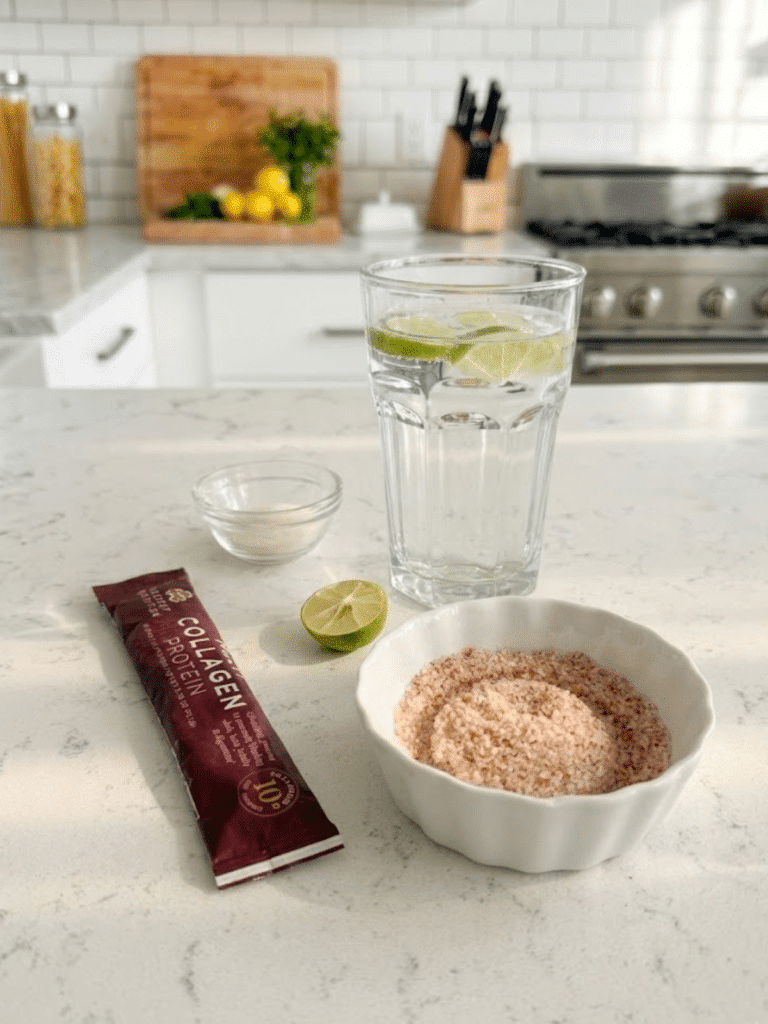
Step-by-Step Method:
- Bloom the gelatin: Pour your room temperature water into a glass or small bowl. Sprinkle the gelatin powder evenly over the surface. Let it sit undisturbed for 2-3 minutes—you’ll see it absorb the water and become spongy. This “blooming” step is crucial for proper texture.
- Add your acid: Once bloomed, add your lemon juice or apple cider vinegar. The acid serves two purposes: it enhances the gelling action and adds flavor to mask the bland taste of plain gelatin.
- Stir thoroughly: Mix everything together until the gelatin is fully dissolved and the mixture is smooth. If you’re using cooler water and the gelatin isn’t dissolving completely, you can microwave it for 10-15 seconds (don’t boil) and stir again.
- Let it set (optional): You have two options here:
- Quick drink method: Consume immediately as a liquid. This is fastest but the texture is… let’s call it “interesting.”
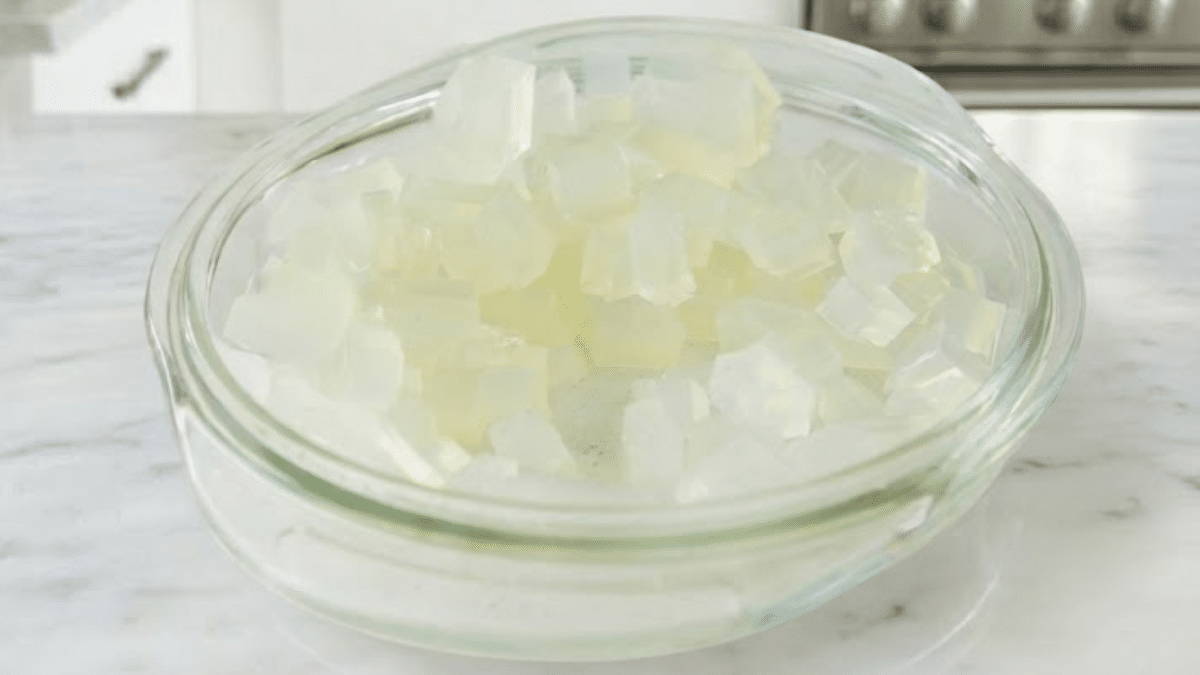
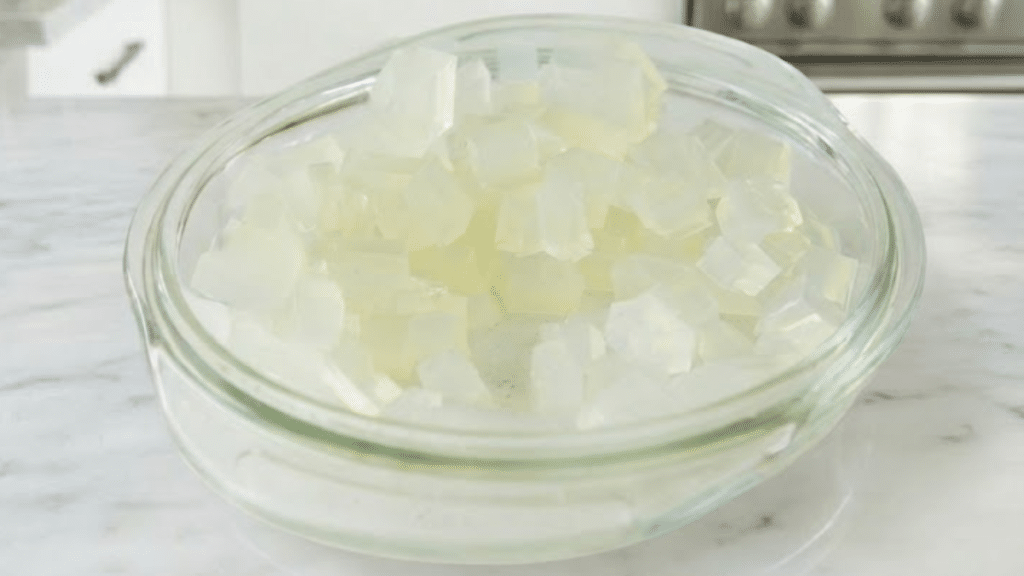
- Gelatin cube method: Pour into a small container and refrigerate for 30-60 minutes until set. Cut into cubes for a more pleasant eating experience.
- Timing is everything: Consume 15-30 minutes before your main meal for maximum appetite-suppressing effect. The gelatin needs time to start working its magic before you eat.
Sofie’s Pro Tip: I make a batch of gelatin cubes on Sunday night that lasts me through Wednesday. I cut them into small squares, store them in an airtight container in the fridge, and grab a couple before lunch and dinner. Game changer for consistency.
Flavor Variations to Keep Things Interesting
Let me be real with you: plain gelatin water is not winning any taste awards. After about a week of forcing down the basic recipe, I started experimenting with variations to make this sustainable long-term.
Citrus Mint Gelatin: Add fresh mint leaves and a splash of orange juice along with lemon. Refreshing and actually enjoyable.
Ginger-Lime Gelatin: Fresh grated ginger plus lime juice. The ginger adds a digestive boost and masks the gelatin flavor beautifully.
Berry-Infused Version: Add a few crushed berries (strawberries or raspberries) for natural sweetness and antioxidants. This one’s my favorite when I’m really craving something sweet.
Herbal Tea Base: Instead of plain water, use cooled green tea or chamomile tea as your liquid base. This adds polyphenols and makes it feel more like a intentional beverage rather than a “hack.”
The key is finding a version you’ll actually consume consistently. The best gelatin trick recipe for weight loss is the one you’ll stick with beyond the first enthusiastic week.
How to Drink Gelatin Powder for Weight Loss (Timing and Strategy)
Here’s where strategy becomes just as important as the recipe itself. How to drink gelatin powder for weight loss isn’t just about preparation—it’s about timing, frequency, and integration into your overall eating pattern.
The Pre-Meal Protocol (Most Effective)
Based on both research and my personal experience, consuming gelatin 15-30 minutes before meals produces the most noticeable appetite suppression. This gives the gelatin time to expand in your stomach and trigger those satiety hormones before you start eating.
I typically use this approach before lunch and dinner—my two largest meals. I found that using it before breakfast wasn’t as necessary since I’m naturally less hungry in the morning anyway. (Know your own patterns and customize accordingly.)
The Late-Night Craving Buster
This is where the gelatin trick became genuinely game-changing for me. I’m a nighttime snacker—always have been. Around 9 PM, my brain decides it needs something sweet or crunchy, regardless of whether I’m actually hungry.
Now? I keep gelatin cubes prepared specifically for these moments. A few cubes of the berry-infused version satisfy the need for “something” without derailing my day’s eating. At roughly 20 calories per serving versus 200+ for my typical nighttime snack choices, the math works strongly in my favor.
Can You Drink Gelatin Water While Fasting?
This question comes up constantly on Reddit and in YouTube comments. The short answer: technically no, because gelatin contains protein and calories, which breaks a true fast.
However—and this is important nuance—if you’re doing intermittent fasting primarily for weight loss (not for autophagy or other fasting-specific benefits), a small serving of gelatin might actually support your goals by preventing the binge eating that often happens when breaking a fast too hungry.
Some people use a small gelatin drink (made with less gelatin, maybe half a tablespoon) as a “soft break” to their fasting window before their actual meal. It’s not orthodox fasting, but if it helps you maintain your eating window consistently? That practical benefit might outweigh the theoretical purity.
Personally, I don’t formally fast, but I do naturally have a later breakfast, and I’ve found that a small gelatin drink around 11 AM helps bridge me comfortably to lunch without the ravenous hunger that used to lead to poor food choices.
Does Gelatin Help With Weight Loss? My Honest 60-Day Results
Okay, time for complete transparency about my experience with the gelatin trick for weight loss.
What actually changed:
I lost 6 pounds over two months. Not dramatic, not Instagram-worthy transformation territory, but steady and sustainable.
My portion sizes decreased naturally. This is the most significant change—I genuinely needed less food to feel satisfied at meals, particularly dinner.
Nighttime snacking dropped by about 70%. Having the gelatin cubes as my “I need something” option completely changed this longstanding habit.
Bloating reduced noticeably. Whether this is from the gelatin supporting gut health or simply from eating less overall, I feel less uncomfortable after meals.
My cravings for sweets between meals diminished. I can’t explain the mechanism here, but it’s been a consistent observation.
What didn’t change:
I didn’t experience any “fat melting” or rapid transformation. This isn’t a metabolic miracle—it’s an appetite management tool.
I still needed to be mindful about my food choices. The gelatin helped with quantity, but I still had to make quality decisions about what I ate.
Exercise remained important. The gelatin didn’t suddenly make me lose weight without maintaining my regular movement habits.
My energy levels didn’t dramatically increase, despite some TikTok claims. I felt fine, but this wasn’t a noticeable energy boost.
The Real Value Proposition: The gelatin trick worked for me because it made reducing my calorie intake easier, not because it magically changed my metabolism. It’s a tool that supports behavior change, which is where actual weight loss happens.
Gelatin vs. Collagen: What’s the Actual Difference?
I get asked this constantly: “Can I just use collagen powder instead? Isn’t it the same thing?”
Not quite, and the differences matter if you’re specifically trying to use this for appetite suppression.
Gelatin is cooked collagen that gels when cooled. It has a unique property: it forms that thick, gel-like consistency that takes up physical space in your stomach. This volumetric effect is part of why it works for appetite control.
Collagen peptides (what’s in most collagen supplements) are hydrolyzed—broken down into smaller peptides that dissolve completely in liquid and don’t gel. They’re more convenient for mixing into coffee or smoothies, but they lack the volumetric advantage.
Both provide similar amino acids (glycine and proline), so both offer protein satiety and potential gut health benefits. But for the specific gelatin trick for weight loss application, actual gelatin that forms a gel seems more effective based on user experiences and the physiological logic.
That said, collagen peptides are still beneficial—I actually use both. I add collagen peptides to my morning coffee for the skin and joint benefits, and I use actual gelatin for the weight management application before meals.
Kelly Clarkson, Celebrity Trends, and Managing Expectations
Let’s address the elephant in the room: What did Kelly Clarkson use for weight loss?
This question appears in every comment section about the gelatin trick, often with the implication that gelatin was her secret. Here’s the truth: Kelly Clarkson has discussed using medication (specifically a weight loss prescription) along with dietary changes and walking.
The celebrity connection to gelatin comes from various wellness influencers and some functional medicine practitioners recommending bone broth and gelatin-rich foods for overall health. But attributing any celebrity’s weight loss to a single trick or ingredient is almost always oversimplified.
Celebrity transformations typically involve: professional nutritionists creating customized meal plans, personal trainers providing structured exercise programs, possible medical interventions when appropriate, and resources most of us don’t have access to.
The gelatin trick can absolutely be part of your approach, just as it might be part of a celebrity’s comprehensive program. But it’s not a secret Hollywood hack that replaces all the other fundamentals of weight management.
If you’re looking for natural approaches that address multiple wellness aspects, you might also be interested in my pink salt recipe for weight loss, which takes a complementary approach to supporting metabolic health.
How Much Gelatin Should I Use Per Day? Safety and Limitations
Let’s talk about appropriate dosing and important safety considerations, because more is definitely not better with gelatin.
Recommended Daily Amount
How much gelatin should I use per day? The sweet spot appears to be 1-2 tablespoons daily, divided between servings.
I personally use 1 tablespoon before lunch and another before dinner, totaling 2 tablespoons per day. This provides approximately 12 grams of protein while keeping gelatin intake at a reasonable level.
Some aggressive protocols on TikTok suggest 3-4 tablespoons daily, but I’d caution against this without medical supervision. Excessive protein intake from any single source isn’t ideal, and too much gelatin can cause digestive discomfort.
Can You Take Gelatin Daily? Long-Term Considerations
Can you take gelatin daily? Yes, gelatin is generally safe for daily consumption at reasonable amounts. It’s essentially just protein, and humans have consumed gelatin-rich foods (bone broth, meat with connective tissue) throughout history.
That said, I recommend treating this as a tool you use when it’s helpful, not a lifelong requirement. I’ve been using it daily for two months, but I expect to cycle off eventually or use it more sporadically once I’ve established better portion control habits.
The goal isn’t gelatin dependence—it’s using gelatin as training wheels while you develop more intuitive eating patterns.
Important Safety Warnings
Who should avoid or limit gelatin:
- People with kidney disease: The high protein content requires kidney processing. Consult your doctor first.
- Those with gelatin allergies: Rare but real. Stop immediately if you experience allergic symptoms.
- Individuals taking blood thinners: Gelatin contains vitamin K, which can interact with warfarin and similar medications.
- Pregnant or nursing women: While gelatin is generally safe, always consult your healthcare provider before adding supplements or making significant dietary changes.
Potential side effects: Digestive discomfort (bloating, gas) if consumed in excess; feeling overly full if you use too much before meals; possible allergic reactions in sensitive individuals.
Can Vegetarians Try This? Plant-Based Alternatives
Here’s the challenging part for vegetarians and vegans: traditional gelatin is an animal product derived from collagen in animal connective tissue (typically pork or beef). It’s not plant-based.
Can vegetarians try this? Not with traditional gelatin, but there are alternatives worth exploring.
Agar-agar is a seaweed-derived gelling agent used in many plant-based recipes. It provides the gelling effect and volume, though it doesn’t offer the same amino acid profile as gelatin. You won’t get the glycine and proline benefits, but you will get the volumetric appetite suppression.
I tested agar-agar using a similar recipe (1 teaspoon agar powder to 1 cup liquid), and while it gels beautifully, I personally didn’t notice the same satiety effect. This makes sense—it’s essentially just fiber without the protein component.
Vegetable-based collagen builders are another approach. Foods rich in vitamin C, amino acids, and minerals that support your body’s own collagen production: citrus fruits, berries, leafy greens, nuts, and seeds. This is a whole-food approach rather than a trick, but it’s more aligned with vegetarian principles.
For plant-based eaters looking for appetite management strategies, I’d honestly recommend focusing on high-protein plant foods (legumes, tofu, tempeh) and high-fiber options rather than trying to replicate the gelatin trick specifically.
Realistic Expectations: What This Trick Can and Cannot Do
Let me be your voice of reason here, because the gelatin trick recipe weight loss TikTok hype can create wildly unrealistic expectations.
What this trick CAN do:
Help reduce appetite and support portion control through protein satiety and volumetric filling. Make it easier to maintain a caloric deficit by reducing hunger between meals and before eating. Provide a low-calorie alternative to high-calorie snacks, especially for emotional or bored eating. Support gut health through amino acids that help maintain intestinal lining. Offer a structured ritual that supports mindful eating habits.
What this trick CANNOT do:
Melt fat or boost metabolism significantly—the metabolic impact is minimal at best. Replace the need for an overall healthy eating pattern or caloric awareness. Compensate for extremely poor food choices or massive overconsumption at meals. Work without any effort or behavioral change on your part. Produce rapid, dramatic weight loss like pharmaceutical interventions can. Address underlying emotional eating patterns without additional work.
The people who see the best results with this approach are those who combine it with other positive habits: choosing mostly whole foods, staying active, managing stress, getting adequate sleep. The gelatin is a helpful tool within that larger framework.
If you’re looking for complementary natural approaches, the Dr. Jennifer Ashton gelatin trick recipe offers another evidence-based perspective on incorporating this strategy into a holistic wellness plan.
Gelatin Trick For Weight Loss is a simple and natural wellness hack that uses mineral-rich Himalayan pink salt to help support hydration, digestion, and balance. If you enjoy easy health tips and clean recipes, follow Sofie Recipes on Facebook for more wellness inspiration and nourishing ideas.
Explore beautifully curated health-boosting recipes on Sofie Recipes on Pinterest and discover your next favorite healthy habit!
Frequently Asked Questions About the Gelatin Trick
What is the gelatin trick for weight loss?
The gelatin trick for weight loss involves consuming unflavored gelatin mixed with water and an acidic ingredient (lemon juice or apple cider vinegar) before meals or as a low-calorie snack. It works primarily through protein satiety and volumetric filling—the gelatin provides filling protein while taking up physical space in your stomach, which can naturally reduce appetite and portion sizes. It’s not a metabolic miracle, but rather a practical tool for appetite management that supports easier calorie reduction.
What did Kelly Clarkson use for weight loss?
Kelly Clarkson has publicly discussed using prescription weight loss medication along with dietary changes and increased walking for her transformation. While gelatin and bone broth have been recommended by various wellness practitioners, attributing her results specifically to gelatin would be inaccurate. Celebrity weight loss typically involves comprehensive, professionally guided programs including medical supervision, customized nutrition plans, and structured exercise—not a single trick or ingredient. The gelatin approach can be part of a holistic weight management strategy, but it’s not a celebrity secret that replaces foundational health practices.
What is the 3 ingredient drink for weight loss?
What are the 3 ingredients in the gelatin trick? The basic recipe contains: (1) unflavored gelatin powder (typically 1 tablespoon), (2) water (1 cup), and (3) an acid component like fresh lemon juice or apple cider vinegar (1-2 tablespoons). The gelatin provides protein and creates a gel-like consistency, the water allows the gelatin to bloom and expand, and the acid enhances gelling while adding flavor. Some people add optional ingredients like stevia for sweetness or fresh ginger for digestion, but the core three ingredients are what create the appetite-suppressing effect.
How to drink gelatin powder for weight loss?
How to drink gelatin powder for weight loss most effectively: (1) Bloom 1 tablespoon unflavored gelatin in 1 cup room temperature water for 2-3 minutes, (2) Add your acidic ingredient and stir until dissolved, (3) Either drink immediately or refrigerate 30-60 minutes to set into cubes, (4) Consume 15-30 minutes before meals for maximum appetite suppression. Timing matters significantly—the pre-meal window allows the gelatin to expand in your stomach and trigger satiety hormones before you eat. For best results, use before your largest meals or as a replacement for high-calorie snacks. Consistency matters more than perfection, so find a preparation method and timing that you can maintain long-term.
Does gelatin help with weight loss?
Does gelatin help with weight loss? Yes, but with important caveats. Gelatin can support weight loss through several mechanisms: protein satiety (it triggers appetite-suppressing hormones), volumetric filling (it expands in your stomach, creating physical fullness), low-calorie substitution (replacing higher-calorie snacks), and potential gut health support. However, gelatin doesn’t directly burn fat or significantly boost metabolism. Research suggests people who incorporate gelatin may experience modest weight loss (1-3 pounds over several months) when combined with overall calorie reduction. It works best as a tool that makes eating less easier, not as a standalone solution. The most successful users combine gelatin with healthy eating patterns, regular movement, and adequate sleep.
How much gelatin should I use per day?
The recommended amount is 1-2 tablespoons of unflavored gelatin per day, ideally divided between servings. This provides approximately 6-12 grams of protein while keeping gelatin intake at a safe, reasonable level. I personally use 1 tablespoon before lunch and another before dinner. Excessive amounts (3+ tablespoons daily) can cause digestive discomfort including bloating and gas, and isn’t more effective for weight loss—it’s just more gelatin your body needs to process. Start with 1 tablespoon daily for the first week to assess tolerance, then increase to 2 tablespoons if desired. Remember that this is meant to be a supportive tool, not a primary protein source, so keep amounts moderate.
Can vegetarians try this?
Unfortunately, traditional gelatin is an animal product derived from collagen in animal connective tissue, making it unsuitable for vegetarians and vegans. Agar-agar, a seaweed-derived gelling agent, provides a plant-based alternative that creates similar gel texture and volumetric filling. However, agar doesn’t offer the same amino acid profile (glycine and proline) as gelatin, so the protein satiety benefits differ. For vegetarians seeking appetite management strategies, I’d recommend focusing on high-protein plant foods (legumes, tofu, tempeh), high-fiber options (vegetables, whole grains), and foods rich in nutrients that support your body’s own collagen production (vitamin C-rich fruits, leafy greens, nuts, seeds). This whole-food approach aligns better with plant-based principles than trying to replicate the gelatin trick specifically.
Can you drink gelatin water while fasting?
Can you drink gelatin water while fasting? Technically no—gelatin contains protein and calories (approximately 6 grams protein and 24 calories per tablespoon), which breaks a true fast. If you’re fasting for autophagy, cellular cleanup, or strict metabolic benefits, gelatin would interrupt that process. However, if you’re doing intermittent fasting primarily for weight loss and calorie control, a small amount of gelatin might actually support your goals by preventing the extreme hunger that leads to overeating when breaking your fast. Some people use a half-tablespoon gelatin drink as a “soft break” before their eating window, finding it helps prevent binging. This isn’t orthodox fasting, but pragmatically, if it helps you maintain your fasting schedule more consistently, that practical benefit might outweigh the technical purity. Choose based on your primary fasting goals.
Can you take gelatin daily?
Yes, you can take gelatin daily—it’s generally safe for most people at recommended amounts (1-2 tablespoons per day). Gelatin is essentially just protein, and humans have consumed gelatin-rich foods like bone broth throughout history without issues. However, I recommend viewing it as a tool you use when helpful rather than a lifelong requirement. Use it consistently while establishing better eating habits and portion control, then consider cycling off or using it more sporadically once those habits are established. Some important exceptions: people with kidney disease should consult doctors before high-protein supplementation, those on blood thinners should be cautious due to vitamin K content, and anyone with gelatin allergies should obviously avoid it. Monitor how you feel—if you experience persistent digestive discomfort, reduce your intake or take breaks between periods of use.
The Bottom Line: Is the Gelatin Trick Worth Trying?
After two months of testing this viral trend and analyzing the actual science, here’s my honest conclusion: the gelatin trick for weight loss is a legitimate appetite management tool that can support your wellness goals—when you approach it with realistic expectations.
This isn’t going to replace healthy eating habits or transform your body overnight. But as a practical strategy for reducing portion sizes, managing between-meal cravings, and making calorie reduction feel less restrictive? It genuinely works for many people, myself included.
What I appreciate most about this approach is its simplicity and low cost. You’re not buying expensive supplements with proprietary blends and inflated claims. You’re using a basic ingredient that’s been recognized as beneficial for decades, just in a more strategic way.
The people who see the best results are those who integrate gelatin into a broader wellness approach: mostly whole foods, regular movement, adequate sleep, stress management. The gelatin makes that larger picture easier to maintain by addressing one of weight loss’s biggest challenges—hunger and appetite control.
My recommendation? Give it an honest 30-day trial. Make a batch of gelatin cubes each Sunday, use them before your two largest meals daily, and pay attention to how your hunger levels and portion sizes change. Don’t expect miracles, but do expect a genuine tool that can make sustainable weight management feel more achievable.
And remember: the best approach to wellness is the one you can maintain long-term. If gelatin becomes a sustainable part of your routine? Fantastic. If it doesn’t work for your lifestyle or preferences? That’s fine too. There are many paths to the same destination.
The gelatin trick is simply one tool in your wellness toolbox—use it if it serves you, skip it if it doesn’t, and never let any single strategy become your entire approach to health.